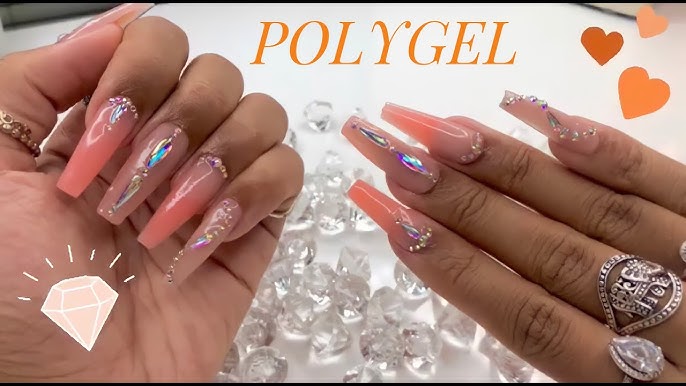
How do you cure polygel without a UV/LED lamp?
Curing polygel seems simple at first glance. You apply the gel, put your hand under the lamp, press a button, and a minute later it‘s hard. But after ruining a few sets myself—soft spots, peeled edges, nails that broke in days—I realized there’s a bit more to it.
If you‘ve struggled with curing polygel correctly, you’re not alone. Let‘s break down why lamps matter, what to do when you don’t have one, and the mistakes that keep your nails from curing right.
Why UV and LED Lamps Are Non‑Negotiable
Polygel is a hybrid product that stays soft and moldable until it‘s exposed to a very specific type of light. It doesn’t air‑dry like regular polish. It doesn‘t harden over time on its own. The chemical reaction that turns it from a putty‑like material into a rock‑hard nail enhancement only happens when UV or LED light hits the photoinitiators inside the gel.
Here’s what’s actually happening on a chemical level: photoinitiators absorb light at particular wavelengths and kick off a polymerization reaction. That reaction links the gel‘s molecules together into a strong, durable polymer. Without the correct light, nothing happens. Your polygel stays soft, sticky, and weak.
One of the most practical things about polygel is that it won’t harden while you‘re working with it. Unlike acrylic, which sets in seconds once you mix it, polygel sits patiently until you put it under a lamp. This makes it incredibly beginner‑friendly because you can take your time shaping, adjusting, and perfecting the form. It only firms up when you decide it should.
A properly cured polygel nail feels solid, has no tacky residue, and holds its shape without any softness underneath.
Can You Cure Polygel Without a UV or LED Lamp?
Short answer: not really. The long answer is that you can approximate the process with alternatives, but they’re significantly less reliable.
Natural sunlight is the most common alternative mentioned online. Sunlight contains UV rays, so in theory, it can trigger the same chemical reaction as a lamp. In practice, the intensity is much weaker. You‘d need to sit in direct sun for 20 to 30 minutes or longer, depending on how bright the day is. Even then, the cure might be incomplete—hard on the outside but soft in the middle.
Several sources suggest that LED lights can work as a substitute, provided they emit the correct wavelengths (roughly 395–405 nanometers). But here’s the catch: standard LED bulbs in your home aren‘t designed for this purpose. The UV output is minimal. A specialized LED nail lamp is still your best bet.
Some articles mention “thermal curing techniques” or DIY setups using heat. This is where I get cautious. Polygel isn‘t designed to cure with heat alone. Applying external warmth might make the surface feel firmer, but it won’t trigger full polymerization. You‘d end up with nails that feel solid on the outside while the inner layers remain uncured.
Bottom line: curing polygel without a proper lamp is possible in theory, but I wouldn’t recommend it for anything beyond an emergency. The risk of under‑cured product is simply too high.
Common Curing Mistakes (And How to Avoid Them)
Over the years, I‘ve seen the same mistakes pop up again and again. Here are the big ones to watch for.
Curing too little. This is by far the most common error. A nail that feels hard on the surface can still be soft underneath. If your lamp’s wattage is low (under 36 watts), you‘ll likely need to cure longer than the instructions suggest. Most brands base their recommendations on 36‑watt or 48‑watt lamps.
Curing too much. While it’s less common than under‑curing, over‑curing is possible. Some gels may discolor, lose their gloss, or even turn slightly yellow when exposed to excessive light. Certain colors can fade faster during wear.
Using the wrong lamp. Not all UV/LED lamps are created equal. A lamp that emits the wrong nanometer wavelength won‘t cure your product correctly, no matter how long you leave it under the light. Cheap lamps purchased from online marketplaces often claim to emit both 365 nm and 405 nm, but in reality, their output is much less powerful. The product remains partially uncured, which can lead to allergies over time.
Applying the product too thickly. Thick layers of polygel take longer to cure and often cure unevenly. The outer surface may harden while the interior stays soft and weak.
Skipping proper prep. Even the best‑cured polygel will lift if your natural nails aren‘t clean, dry, and properly buffed before application. Oils and moisture create a barrier that prevents the gel from bonding.
A Note on Allergies and Uncured Product
Here’s something I wish someone had told me earlier: under‑cured gel products can seep into your skin over time and trigger allergic reactions. Once a gel allergy develops, it‘s often permanent. You may become sensitive not just to that specific brand but to similar products across the market.
This is why I always recommend investing in a high‑quality lamp from a reputable source—ideally one that’s been independently tested for its wavelength output. It‘s not about having the most expensive equipment. It’s about knowing that your product is actually curing.
Final Thoughts
Curing polygel isn‘t complicated, but it does require the right equipment and a bit of knowledge. A proper UV or LED lamp isn’t optional—it‘s the heart of the entire system. Sunlight might work in a pinch, but it’s inconsistent and slow. Alternative methods are often unreliable and can leave you with weak, unsafe nails.
Pay attention to your lamp‘s wattage. Follow the recommended curing times. Apply thin layers. Prep your nails thoroughly. These small steps make the difference between a set of polygel nails that lasts three weeks and one that fails in three days.
Your nails are worth the extra minute of curing time. Trust me—I’ve learned that lesson the hard way.
Read also: The Understated Elegance: Your Guide to the French Reverse Manicure